
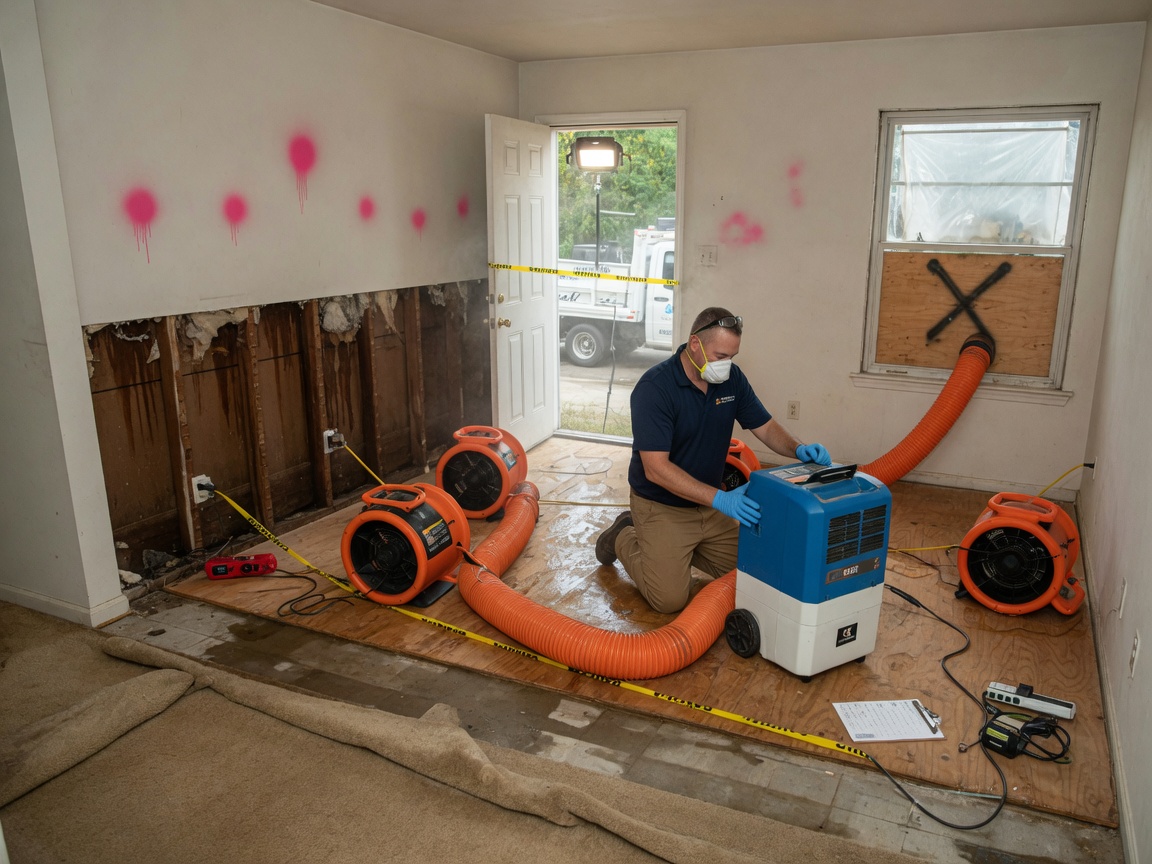
In Bexar County neighborhoods around the Alamo and River Walk, structural drying targets older masonry and wood-frame homes where moisture hides in thick walls after river or stormwater intrusion. Hot summers speed mold development inside attics and under slab foundations common along I-10 and I-35, while mild winters keep humidity high enough to require continuous dehumidification year-round. High Quality Restoration crews based in Carrollton arrive around the clock to extract trapped water before it damages historic elements near the San Antonio Zoo or tourism districts.
Structural Drying in San Antonio — What We Handle
- ✓Limestone and older masonry around the River Walk retains moisture longer than modern builds, needing extended drying cycles
- ✓Work in high-traffic Alamo and River Walk zones requires low-profile equipment to avoid disrupting visitors
- ✓Slab foundations prevalent in Bexar County demand targeted under-floor drying after I-35 corridor leaks
In Carrollton neighborhoods like Old Town Carrollton and Indian Creek, many homes built before 1990 contain plaster walls and hardwood subfloors that trap water differently than modern drywall. After severe storms common in Dallas County, water migrates into cavities behind baseboards and under vinyl plank flooring. We use moisture meters and thermal imaging to locate saturation points that standard fans miss, then place air movers and dehumidifiers in patterns that match the home's layout and the season's high humidity levels.
Mild winters in North Carrollton and Trinity Mills still allow pipe bursts that soak insulation inside exterior walls. Structural drying here requires monitoring daily moisture readings because the area's clay-heavy soil slows natural evaporation and keeps crawl spaces damp longer. We adjust equipment run times when humidity spikes during summer storms, preventing secondary damage to electrical boxes and HVAC returns that sit low in many Carrollton ranch homes.
Structural Drying Services We Offer in San Antonio
✓Moisture Mapping and Assessment
We scan walls, floors, and ceilings with meters and thermal cameras to chart every wet area before equipment goes in.
✓Cavity and Wall Drying
Specialized injectors and directed airflow pull moisture from behind drywall and inside stud bays common in Carrollton homes.
✓Subfloor and Hardwood Drying
We use mats and low-profile air movers to dry hardwood and plywood subfloors without cupping or delamination.
✓Slab and Foundation Drying
Targeted dehumidification and perimeter fans remove moisture from concrete slabs after foundation leaks or storm runoff.
✓Daily Moisture Monitoring
Technicians return each day to log readings and adjust equipment until materials reach safe dry standards for the local climate.
How It Works in San Antonio
- 1
Initial Inspection
We walk the property, test affected materials, and identify hidden moisture paths in walls and under floors.
- 2
Water Extraction
Standing water is removed first so drying equipment can focus on absorbed moisture in building materials.
- 3
Equipment Setup
Air movers, dehumidifiers, and cavity tools are placed according to the moisture map and home layout.
- 4
Monitoring And Completion
Daily checks continue until moisture levels stabilize, then equipment is removed and the site is cleared.
Serving All of San Antonio
We regularly handle structural drying jobs near:
- 📍The Alamo
- 📍River Walk
- 📍San Antonio Zoo
Structural Drying Pricing in San Antonio
Cost depends on square footage affected, depth of saturation, and number of days equipment must run.
Want the full picture of this service? See our Structural Drying page, or everything we do in San Antonio, TX.