
2026-09-17 · Thomas Reed
Detecting Hidden Moisture in Carrollton Attics After Roof Leaks
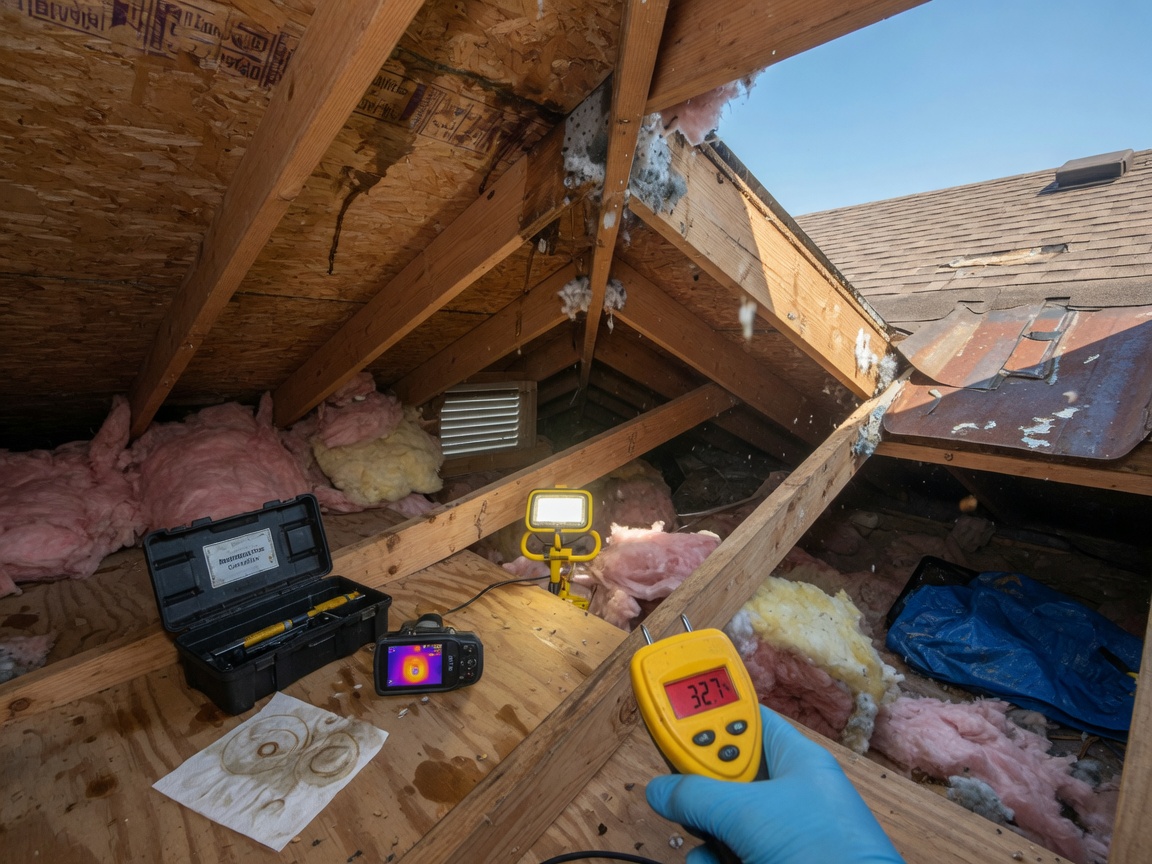
Roof leaks in Carrollton attics typically leave detectable moisture pockets within 48 to 72 hours after heavy storms, especially in homes built before 1990 in areas such as Old Town Carrollton and Indian Creek. These leaks spread through insulation and rafters when hot, humid summers follow the initial damage, trapping water that mild winters fail to dry out completely.
Signs of Trapped Moisture in Local Attics
Carrollton homeowners notice musty odors rising from ceilings in North Carrollton properties after spring storms roll through from the Dallas area. Discolored drywall around attic access points signals water migration along joists in Trinity Mills homes with original asphalt shingles. Warped plywood sheathing appears in attics of older Downtown Carrollton houses where wind-driven rain during severe weather bypasses flashing. Hidden moisture often sits behind insulation batts, raising relative humidity above 60 percent and promoting mold growth within 7 to 10 days. Checking for soft spots on rafters by pressing with a gloved hand reveals saturation that meters miss on the surface.
Detection Methods That Work in Carrollton Homes
Infrared cameras locate temperature differentials of 5 to 10 degrees Fahrenheit caused by evaporative cooling in moist insulation, a reliable approach after the frequent thunderstorms that hit Plano and Lewisville borders. Pin-type moisture meters inserted into attic sheathing read 18 to 25 percent wood moisture content in affected zones of Indian Creek homes. Borescope inspections through small holes in drywall confirm water behind ceilings in 1950s-era Old Town Carrollton residences where roof leaks travel along original lath. These tools account for the area's clay-heavy soil that slows drainage and keeps crawl spaces damp, indirectly feeding attic humidity through poor ventilation.
How Carrollton Weather Patterns Affect Moisture Spread
Hot, humid summers push attic temperatures past 120 degrees Fahrenheit, accelerating mold on wet fiberglass insulation in North Carrollton attics after roof damage. Occasional winter storms bring ice dams along eaves in older Trinity Mills homes, forcing meltwater under shingles and into concealed spaces. Severe thunderstorms common to the Dallas region deliver 2 to 4 inches of rain in under an hour, overwhelming gutters on Indian Creek properties and driving water into ridge vents. This cycle leaves residual moisture that standard attic fans cannot remove once humidity stays elevated for weeks.
Practical Steps After Finding Moisture
Remove wet insulation in 2-foot sections around leak points to allow airflow, then monitor readings every 48 hours until wood moisture drops below 15 percent. Increase ventilation by adding ridge vents rated for 1 square foot per 150 square feet of attic floor in Carrollton homes lacking them. Document all affected areas with photos before repairs to support insurance claims common after storms affecting Lewisville and Plano residents. Professional structural drying follows once visible water is extracted to prevent hidden pockets from migrating to drywall.
When Professional Help Becomes Necessary
Persistent readings above 20 percent after 5 days of drying indicate the need for targeted extraction in attics of Downtown Carrollton homes where leaks have reached multiple bays. Visible mold colonies larger than 10 square feet require mold remediation to avoid health issues in humid summer conditions. For full cost details on restoration work in Carrollton, review the cost guide for water damage restoration in Carrollton homes. Early detection in these neighborhoods limits damage to framing and keeps repairs focused on the original leak path.