
2026-10-28 · Scott Bennett
Water Damage Restoration After Spring Thunderstorms in Carrollton
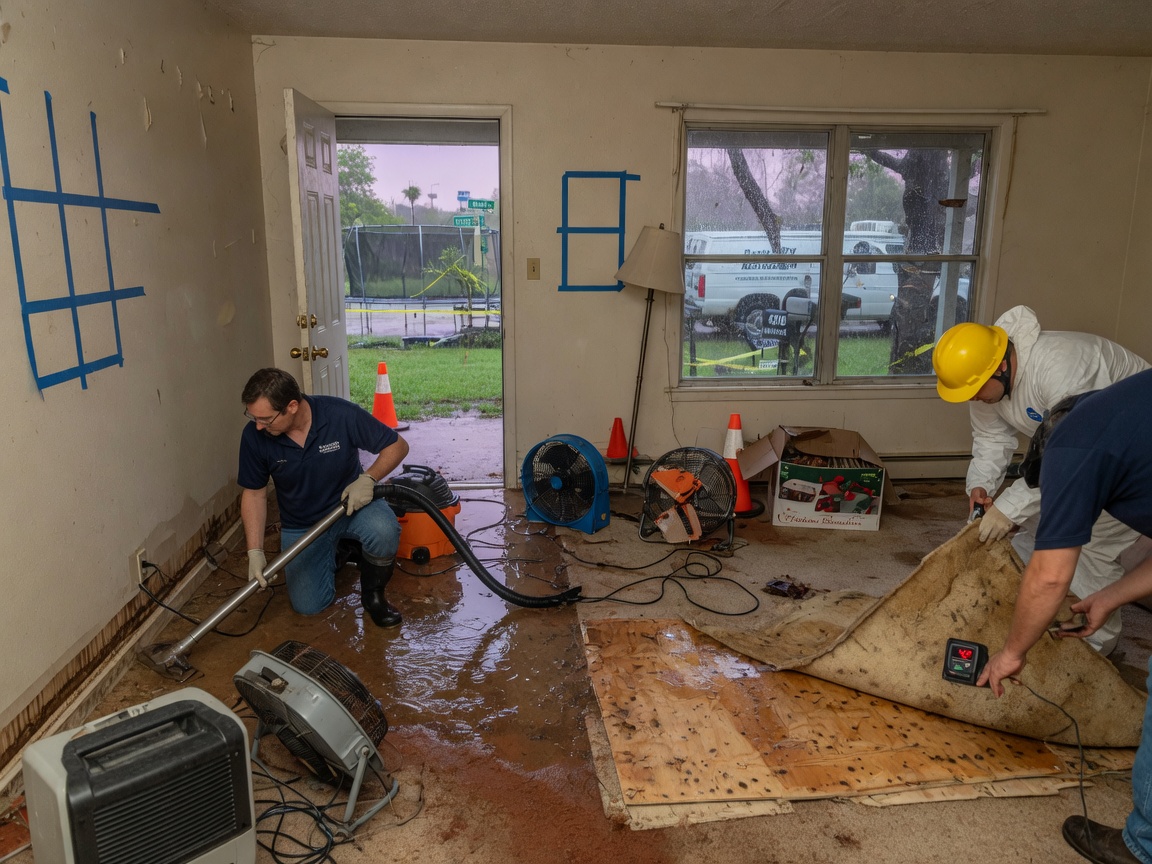
Spring thunderstorms in Carrollton often drop heavy rain in short bursts that overwhelm gutters and low-lying lots in Downtown Carrollton and Trinity Mills. Water enters through roof seams, window sills, and foundation cracks common in 1980s-2000s housing stock across Dallas County. High Quality Restoration responds within hours because the company operates 24 hours a day from its Carrollton base. The first step is always rapid removal of standing water to limit migration into subfloors and wall cavities before humidity levels spike.
Storm Water Entry Points in Carrollton Homes
Thunderstorms hit hardest in North Carrollton and Indian Creek where mature trees drop limbs onto shingles and older flat roofs collect debris. Water follows the path of least resistance along fascia boards and into attics, then soaks insulation and ceiling drywall. In Old Town Carrollton, slab-on-grade homes built before 1990 frequently see seepage at plumbing penetrations when rain exceeds two inches per hour. These patterns require technicians to trace moisture with infrared cameras rather than relying on visible stains alone. Storm Damage Restoration crews map affected zones room by room before any drying equipment is placed.
Water Extraction Priorities After Heavy Rain
Standing water on carpet and hardwood in Trinity Mills homes must be removed the same day to prevent cupping and delamination. Portable extraction units pull 50-70 gallons per minute from saturated pads, followed by immediate removal of wet underlayment. In Josey Ranch Lake area properties, water often pools in finished basements or lower-level bonus rooms because the terrain slopes toward the lake. Water Extraction teams isolate these zones with containment barriers so moisture does not travel through HVAC returns into unaffected living spaces. Every extraction pass is documented with moisture readings logged at multiple depths.
Structural Drying in Humid Dallas County Conditions
After extraction, air movers and dehumidifiers run continuously because Carrollton summers maintain 70-80 percent relative humidity even after the storm passes. Technicians place equipment in a grid pattern that accounts for the open floor plans typical in North Carrollton ranch homes. Structural Drying protocols include daily monitoring of wall cavities and subfloor moisture until readings fall below 12 percent. In mild winter storms that occasionally bring hail and wind-driven rain, drying times extend because cooler air holds less moisture. Homeowners in Plano and Lewisville border areas sometimes request the same drying sequence when storms track north from downtown Dallas.
Mold Risks and Follow-Up Monitoring
High humidity after spring storms accelerates mold growth on drywall and baseboards within 48-72 hours in poorly ventilated bathrooms and laundry rooms. Mold Prevention Steps Following Flooding Near Carrollton Creek Trails outlines inspection points around window wells and HVAC closets that owners can check themselves. When secondary moisture remains behind cabinets or under toe-kicks, hidden colonies form quickly. Restoration teams return at the 72-hour mark to retest and adjust equipment placement if readings remain elevated.
Insurance Documentation and Cost Planning
Carrollton residents filing claims after thunderstorms benefit from keeping dated photos of every affected room before equipment is installed. Cost Guide for Water Damage Restoration in Carrollton Homes breaks down typical line items such as extraction, drying, and material removal so homeowners can compare estimates. Adjusters appreciate itemized moisture logs that show daily progress rather than generic invoices. High Quality Restoration supplies these records directly to the carrier while work continues around the clock.