
2026-09-17 · Thomas Reed
Drying Out Finished Basements in Carrollton After Sump Pump Failure
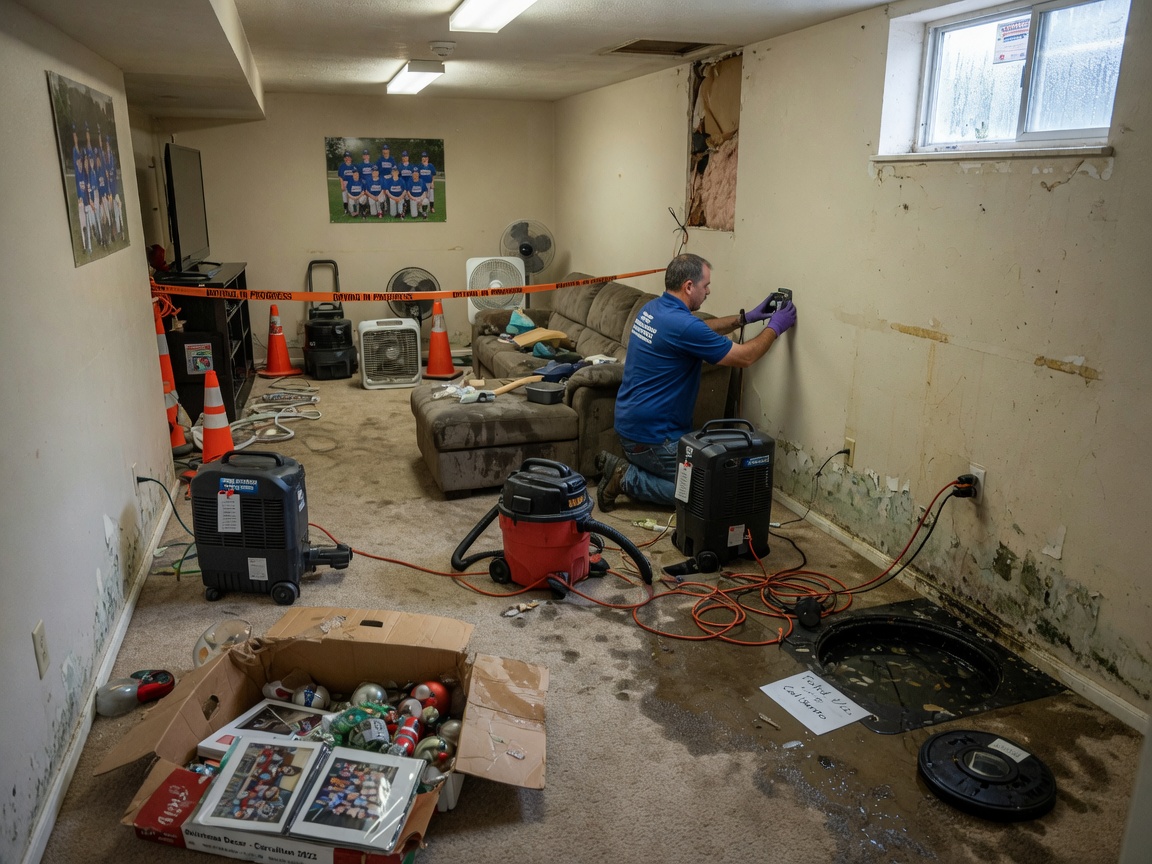
In Carrollton, drying a finished basement after sump pump failure usually requires 5 to 10 days of active dehumidification and airflow once standing water is removed, though older homes in Old Town Carrollton can extend that timeline due to porous concrete and limited access points. Severe storms common during the hot, humid summers bring sudden groundwater surges that overwhelm residential sump systems, especially in North Carrollton and Trinity Mills where many homes sit on clay-heavy soil that holds moisture longer. The first priority is always removing pooled water before it soaks into finished walls or flooring.
Local Storm Patterns and Basement Risks in Carrollton
Carrollton experiences occasional severe storms that drop several inches of rain in hours, pushing water tables high enough to defeat sump pumps in finished basements across Downtown Carrollton and Indian Creek. These events differ from the mild winters that rarely cause freeze-related issues, yet the resulting humidity lingers because Dallas County summers average high dew points. Homes built before the 1990s in Old Town Carrollton often have finished lower levels with wood framing directly against foundation walls, allowing moisture to wick upward quickly. Newer construction in North Carrollton tends to have better drainage but still faces problems when sump discharge lines clog during heavy runoff. Understanding these patterns helps residents recognize that a single storm can saturate drywall up to 18 inches above the floor if the pump fails overnight.
Removing Standing Water Before Drying Begins
Once the pump is repaired or replaced, the next step is extracting all visible water with submersible pumps and wet vacuums to prevent further absorption into carpet pads or baseboards. In finished spaces, technicians cut small inspection holes in affected drywall to drain trapped water behind the walls rather than leaving it to evaporate slowly. This approach avoids the long-term swelling that occurs in Carrollton homes where basements connect to living areas above. After bulk water removal, crews place air movers at floor level and direct them toward walls to start moving moisture outward. Linking to proven methods like those in structural drying ensures consistent results across different home ages.
Drying Finished Materials Without Removing Them
Drying carpet, drywall, and insulation in place requires daily moisture readings with pin meters and thermal cameras to track progress in hidden cavities. In Trinity Mills homes with finished basements, crews often run dehumidifiers rated for 70-pint daily extraction to pull humidity below 50 percent, which stops mold growth on wood studs. Airflow must reach behind base cabinets and under stairs where water pools during sump failures. Because Carrollton humidity stays elevated after storms, drying equipment runs continuously for several days rather than cycling on and off. Homeowners can speed the process by removing furniture and opening interior doors to improve circulation throughout the lower level.
Monitoring for Mold and Secondary Damage
Even after visible drying, Carrollton basements remain at risk for hidden mold because of the area's humid summers. Weekly checks with moisture meters for two weeks after equipment removal catch any rebound in wall cavities. If readings stay above 15 percent, additional drying or selective material removal becomes necessary. Residents near Josey Ranch Lake or the Carrollton Recreation Center often notice musty odors first because those neighborhoods have slightly higher water tables. Keeping HVAC filters clean during this period prevents spores from circulating upstairs. For homes that also suffered pipe issues, reviewing guidance in How Carrollton Residents Handle Burst Pipes After Winter Freezes provides overlapping prevention tips.
Long-Term Steps After the Basement Dries
Once moisture levels stabilize, installing a battery backup for the sump pump reduces future failures during power outages common in severe storms. French drains or exterior grading improvements help in areas like Indian Creek where runoff collects against foundations. Homeowners in Plano and Lewisville borders sometimes add dehumidifiers set to 45 percent as a permanent measure given the regional climate. Regular inspection of discharge lines every six months prevents clogs that lead to the original problem. These steps keep finished basements usable without repeated water events.