
2026-09-17 · Thomas Reed
Mold Prevention Steps Following Flooding Near Carrollton Creek Trails
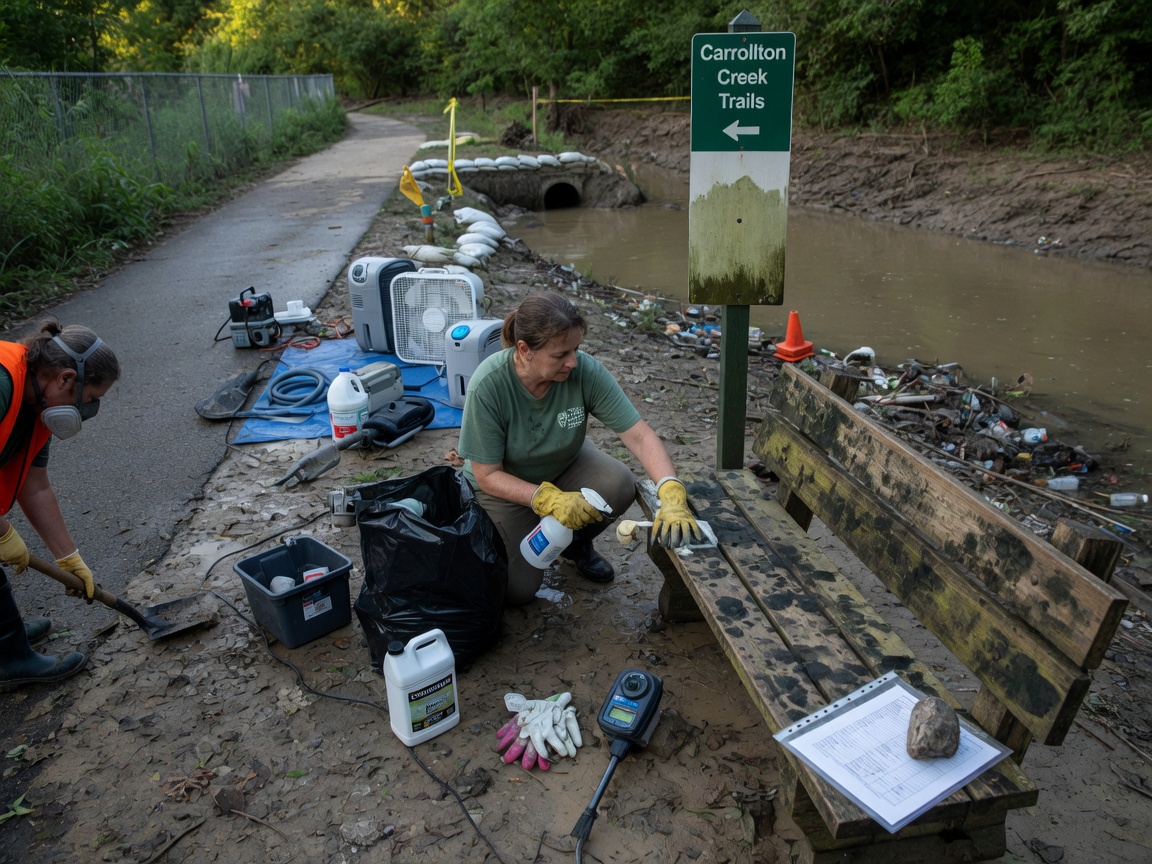
Following flooding near Carrollton Creek Trails, prevent mold by removing standing water and drying all porous materials within 24-48 hours before spores take hold in the humid Dallas climate.
Initial Water Removal and Safety Steps
Carrollton experiences hot humid summers that accelerate mold on wet drywall and carpet after storms push water from nearby creeks into yards in Indian Creek and North Carrollton. Start by shutting off electricity to affected zones and wearing protective gear. Extract water using pumps rated for residential volumes, then document damage with photos for insurance. Homes built before 1990 in Old Town Carrollton often have older subfloors that trap moisture longer than newer builds in Trinity Mills. Move furniture and contents to dry areas immediately. Flood Restoration crews familiar with Dallas County terrain know how clay-heavy soil slows drainage and extends drying times. Avoid walking on saturated carpet to prevent spreading contaminants. This first phase sets the timeline for all later prevention work.
Moisture Monitoring and Dehumidification
Once visible water is gone, measure moisture levels in walls and floors with meters to confirm readings drop below 15 percent. Carrollton's mild winters still bring occasional severe storms that leave hidden pockets in crawl spaces common around Josey Ranch Lake. Run commercial dehumidifiers and air movers continuously for 3-5 days, aiming for indoor humidity under 50 percent. Check behind baseboards in Downtown Carrollton homes where older plaster holds water against framing. Structural Drying techniques account for the area's high summer humidity that can reintroduce moisture overnight. Place sensors in multiple rooms and log readings every four hours. Homes near Carrollton Creek Trails sit on flatter ground that retains runoff longer, requiring extra equipment compared to sloped lots in Plano. This monitoring prevents the 48-hour window from slipping and allows mold to start.
Targeted Drying for Common Materials
Focus on carpet, hardwood, and drywall because these materials in Carrollton homes absorb water fastest during creek overflows. Lift carpet edges for airflow underneath and remove padding that cannot be salvaged. For hardwood floors in North Carrollton properties, use specialized drying mats that pull moisture from between boards without refinishing. Replace saturated insulation in walls rather than attempting to dry it. Mold Remediation becomes necessary only when these steps are skipped, but consistent drying in the first week avoids that cost. Test drywall with infrared cameras to locate wet sections hidden by paint. Local crews adjust fan placement based on the tight layouts of 1970s ranch homes prevalent near Trinity Mills. Continue dehumidification until all readings stabilize for 48 consecutive hours.
Long-Term Prevention and Follow-Up Checks
After initial drying, inspect attics and basements monthly for the next three months because residual moisture can migrate during Carrollton's humid summers. Improve grading around foundations in areas like Indian Creek to direct future storm water away from slabs. Install vapor barriers in crawl spaces common to older stock near Carrollton Creek Trails. Local Flood Zone Considerations for Water Damage Restoration in Carrollton explains how FEMA maps affect insurance claims and drying priorities after creek flooding. Schedule professional moisture scans before closing walls. These habits reduce repeat issues for homeowners in Lewisville-adjacent neighborhoods where similar soil conditions apply. Consistent follow-up keeps mold from returning even after severe weather events.