
2026-09-17 · Thomas Reed
Preventing Recurring Leaks in Carrollton Irrigation Systems
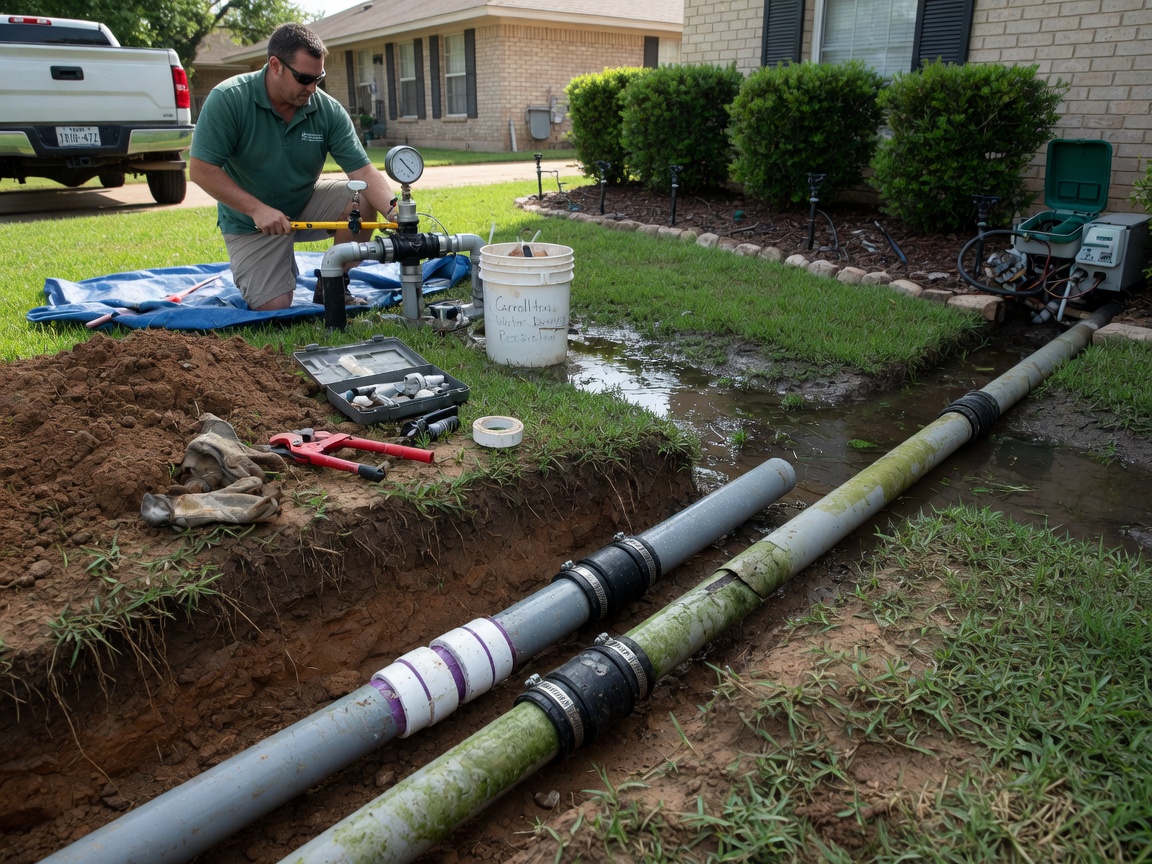
Preventing recurring leaks in Carrollton irrigation systems begins with winterizing lines before the first freeze and scheduling pressure tests every spring ahead of humid summer peaks. Homes in North Carrollton and Trinity Mills often sit on expansive clay soils that shift with moisture changes, stressing buried PVC joints and causing the same break to return within two seasons. Downtown Carrollton and Old Town properties with 1980s–1990s installations see even higher repeat rates when original solenoid valves wear after 8–12 years of Dallas-area temperature swings.
Local Weather and Soil Effects on Irrigation Lines
Carrollton’s hot, humid summers push system pressure above 70 psi for weeks, stretching older poly tubing in Indian Creek yards until micro-cracks form. Occasional severe storms dump several inches of rain in hours, saturating the ground around valves and accelerating corrosion on brass fittings. Mild winters still deliver 20-degree drops that freeze standing water in above-ground backflow preventers, splitting casings that then leak again the next season. Clay-heavy soils common across Dallas County expand when wet and contract when dry, shifting lines laid without proper gravel bedding and reopening repaired joints within 18 months. These cycles explain why the same lateral in a Lewisville-border yard often fails twice before owners replace the entire run.
Routine Inspections That Catch Leaks Early
Walk the zones at dusk each month and note any soggy patches larger than a dinner plate near heads in Josey Ranch Lake neighborhoods. Remove each valve box lid quarterly to check for standing water or mineral buildup on the diaphragm, which signals the start of a slow leak. Test static pressure at the backflow preventer with a gauge; readings above 80 psi require a pressure-reducing valve addition to protect downstream lines. Replace worn washers and O-rings on 4–6 year old heads before summer, as heat accelerates rubber degradation. Document every inspection date and zone reading so patterns emerge before a small drip becomes a slab-soaking flow.
Winterizing Steps That Reduce Spring Failures
Shut off the main irrigation supply at the street curb in late October and open all manual drain valves to empty lines before temperatures dip. Use compressed air at 40–50 psi to blow out remaining water from each zone for 2–3 minutes, moving the hose between heads to avoid trapping moisture that will freeze and split pipes. Insulate exposed backflow assemblies with foam covers rated for 20-degree drops common in Carrollton. Leave the controller in the off position but do not drain the indoor portion of the supply line, which can create air pockets that later cause hammer and new joint stress. These steps cut repeat freeze-related leaks by more than half in Plano and Lewisville homes with similar stock.
When Professional Help Stops the Cycle
Persistent leaks after two DIY repairs usually trace to improper original depth or missing expansion loops in older North Carrollton installations. Burst pipe repair technicians can camera the line and locate the exact shift point without tearing up the entire lawn. If moisture keeps appearing near the foundation after storms, review the related guide on handling freeze damage: How Carrollton Residents Handle Burst Pipes After Winter Freezes. Owners in Old Town Carrollton with slab homes benefit from tying irrigation checks into annual structural drying visits so hidden moisture never escalates. Address the root cause once and the same leak rarely returns.