
2026-10-28 · Scott Bennett
Protecting Hardwood Floors in Carrollton Homes After Bathroom Overflows
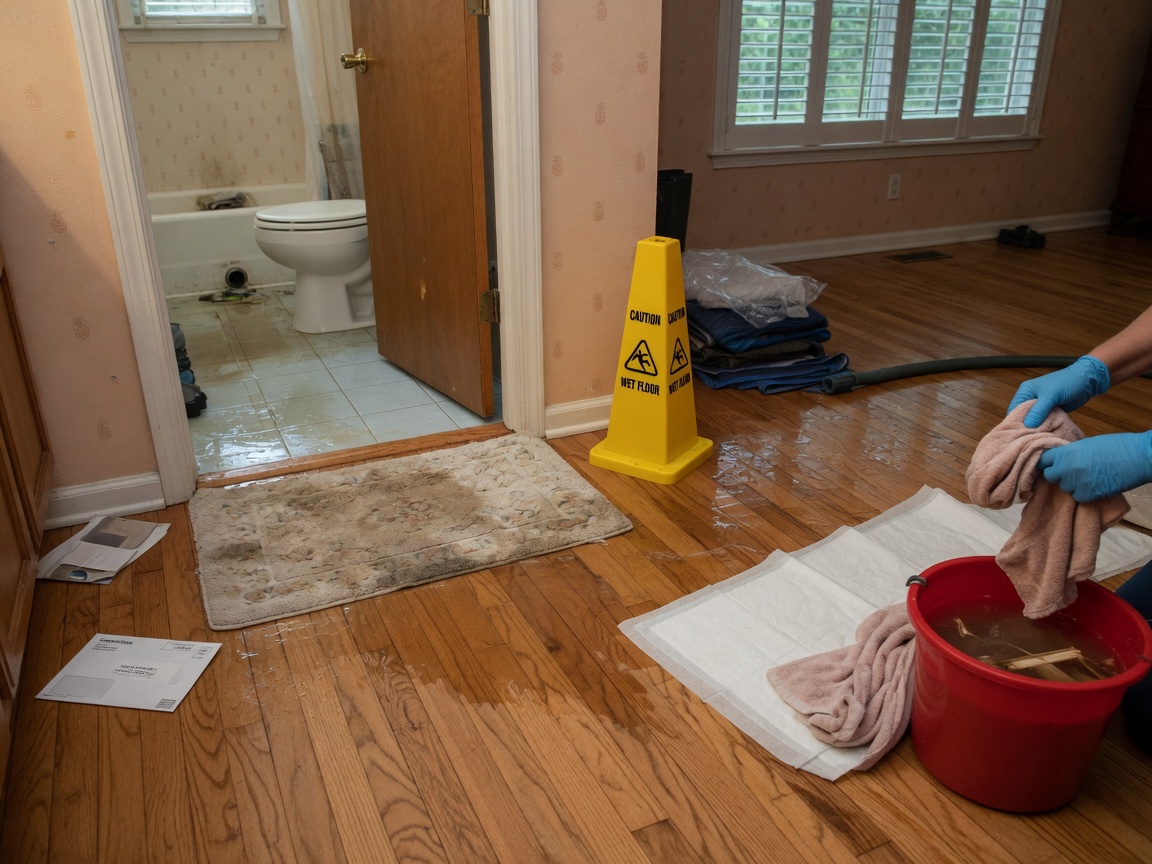
Act within the first 24-48 hours after a bathroom overflow to limit cupping and warping in Carrollton hardwood floors. Older homes in Old Town Carrollton often feature 1950s-1970s oak planks installed directly over concrete slabs, while North Carrollton properties from the 1990s use engineered boards over plywood. Hot, humid summers here trap moisture longer than in Plano or Lewisville, accelerating edge lift when water sits under baseboards.
Immediate Response After Overflow
Stop the water source first, then remove standing water before it migrates into adjacent rooms. In Trinity Mills or Indian Creek homes, bathroom layouts often place toilets near exterior walls, allowing water to travel under door thresholds into hallways. Use a wet vac rated for 5-10 gallons per minute to pull liquid from the surface, then place air movers at 45-degree angles along the grain to start evaporation. Avoid household fans that recirculate humid air typical after summer storms. Contact a local team for professional water extraction if the spill exceeds one gallon or reaches subfloor seams.
Monitor for early signs of distress such as cupping along plank edges or darkening at joints. Carrollton’s mild winters with occasional freezes can compound issues when a burst pipe feeds an ongoing leak, but bathroom overflows usually stem from clogged drains or faulty seals. Check under vanity cabinets where particleboard bases absorb water quickly and transfer it to the floor. Document the affected square footage and take dated photos before any cleanup begins.
Local Climate and Housing Factors
Carrollton’s hot, humid summers raise indoor relative humidity to 60-70 percent for weeks, slowing natural drying of hardwood after overflows. Homes near Josey Ranch Lake or the Carrollton Recreation Center sit on clay-heavy soils that retain moisture, increasing wicking through slab foundations common in Downtown Carrollton. Newer builds in North Carrollton use 3/4-inch engineered layers that tolerate brief exposure better than solid 3/4-inch oak found in Old Town Carrollton, yet both suffer when water reaches the tongue-and-groove. Winter temperature swings from 30°F to 70°F can cause condensation under floor coverings if extraction is incomplete.
Terrain around Crosby Recreation Center slopes gently toward drainage ditches that sometimes back up during severe storms, pushing water into lower-level baths. This regional pattern means overflows in single-story ranch homes often affect more square footage than in two-story Plano properties. Test moisture content with a pin meter at multiple points; readings above 12 percent on oak signal the need for professional hardwood floor drying rather than DIY fans alone.
Drying and Protection Steps
Remove baseboards carefully to allow airflow behind the floor edge, then place dehumidifiers sized at 30-50 pints per day for a typical 200-square-foot bath. Run equipment continuously for 3-7 days while checking readings every 24 hours. Sand and refinish only after moisture drops below 10 percent; rushing this step in humid Dallas conditions leads to recurring cupping within months. For minor spills under 5 square feet, homeowners can place plastic sheeting weighted at edges to slow evaporation and reduce checking.
Protect adjacent rooms by sealing doorways with plastic and tape during drying. In homes with carpet-to-hardwood transitions common in Indian Creek, lift carpet edges to prevent wicking back into the wood. Schedule follow-up visits 30 days later to confirm stable readings, especially after the next humid spell.
When to Call Professionals
Persistent readings above 14 percent or visible mold along baseboards require structural drying equipment beyond consumer models. See the related guide on burst pipe handling after freezes for overlapping winter risks. Track total affected area and timeline in a simple log; this record helps when coordinating repairs across Carrollton and nearby Dallas neighborhoods.